
The New Normal: How ऑपरेशन सिंदूर Rewrote the South Asian Strategic Playbook
For decades, India’s response to cross-border terrorism was often described as one of strategic restraint. Terror attacks were condemned, diplomatic channels were activated and military responses remained limited or carefully calibrated. Operation Sindoor, launched in May 2025 after the Pahalgam terror attack, marked a decisive change in that approach.
The operation demonstrated that India was prepared to combine military force, diplomacy, economic pressure, information management and water policy in a single national response. It also showed that the Line of Control could no longer be treated as a protective barrier for terror infrastructure.
As the documentary series Declassified: Operation Sindoor revisits the 88-hour crisis and its aftermath, the operation deserves to be understood not merely as a military action, but as a turning point in South Asian security strategy.
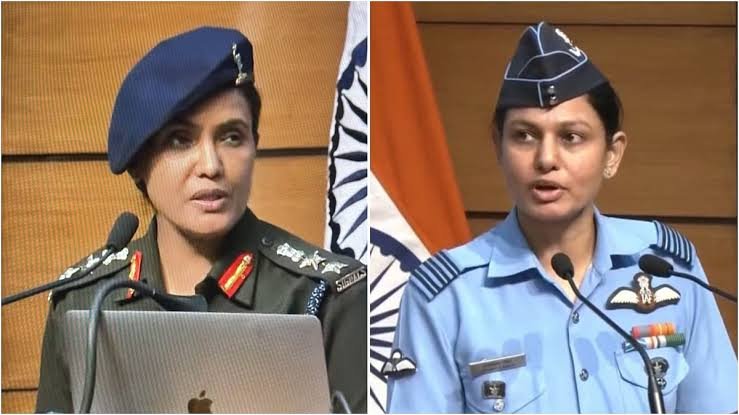
The Catalyst: Violence in Pahalgam
The crisis began on April 22, 2025, when terrorists attacked tourists near Pahalgam in Jammu and Kashmir. Twenty-six civilians were killed, making it one of the deadliest attacks on civilians in India since the 2008 Mumbai attacks. Indian authorities linked the attack to Pakistan-based terrorist networks and identified The Resistance Front, or TRF, as the group associated with the assault.pib.gov+1
The attack was especially shocking because the victims were civilians in a popular tourist destination. According to official accounts, the attackers reportedly asked victims about their religion before opening fire. This suggested that the violence was not only intended to cause casualties but also to provoke communal tension and damage the perception of normalcy returning to Jammu and Kashmir.
Pahalgam had become a symbol of Kashmir’s growing tourism economy and the government’s post-2019 development narrative. By targeting tourists, the attackers sought to send a message beyond the immediate victims. They aimed to frighten visitors, undermine local livelihoods and create the impression that Kashmir remained permanently unstable.
For New Delhi, the attack was therefore treated as both a terrorist atrocity and a strategic challenge.
From Restraint to Punitive Action
India’s response began with diplomatic and administrative measures. The government announced the closure of the Attari-Wagah border, suspension of bilateral trade and restrictions on Pakistani nationals in India. It also announced that the Indus Waters Treaty would be held in abeyance. These steps signalled that the response would not be limited to conventional military channels.
The military phase began during the early hours of May 7, 2025. India announced that it had carried out precision strikes against nine terrorist infrastructure sites in Pakistan and Pakistan-administered Jammu and Kashmir. The targets were described as camps, staging areas and headquarters associated with Pakistan-based organisations, including Lashkar-e-Taiba and Jaish-e-Mohammed.mea.gov+1
According to the Indian government, the strikes were designed to be limited, precise and non-escalatory. The official position was that terrorist infrastructure was targeted rather than Pakistani military facilities or civilian locations. The strikes reportedly took place between approximately 1:05 a.m. and 1:30 a.m. on May 7.cgiistanbul.gov+1
This distinction was central to India’s strategic messaging. New Delhi wanted to establish that it could strike targets across the international boundary while still claiming escalation control. The operation was presented as a counter-terrorism mission rather than the beginning of a broader war.
That combination—deep reach with limited objectives—became one of
Operation Sindoor defining characteristics.
Precision, Technology and Joint Operations
Operation Sindoor highlighted the growing importance of precision weapons, intelligence integration and multi-domain coordination. Air power, missile systems, surveillance platforms and ground-based capabilities were used as part of a broader military framework.
India’s military modernisation has increasingly focused on the ability to locate, identify and neutralise high-value targets quickly. This requires more than advanced aircraft. It depends on satellite imagery, electronic intelligence, unmanned systems, real-time command networks and accurate battle damage assessment.
The operation also reinforced the value of stand-off weapons. Such systems allow aircraft and platforms to strike targets from a distance, reducing exposure to enemy air defences and enabling planners to conduct carefully controlled attacks.
The broader lesson was that modern deterrence is no longer measured only by the size of an army or the number of fighter aircraft. It depends on the speed of the decision cycle: how quickly a state can detect a threat, authorise a response, deliver force and communicate its objectives.
Operation Sindoor demonstrated the importance of that entire chain.
The Indus Waters Treaty Question
The military strikes received the most attention, but the decision to place the Indus Waters Treaty in abeyance created an equally important strategic debate.
Signed in 1960, the treaty governs the use of the Indus river system by India and Pakistan. It has survived several wars and prolonged periods of political hostility. India’s decision to suspend its participation represented a major departure from the tradition of keeping water cooperation separate from security disputes.
Prime Minister Narendra Modi’s statement that “blood and water cannot flow together” captured the government’s new position. The message was that agreements could not be treated as permanently insulated from repeated terrorist attacks.
The move had both symbolic and practical dimensions. Pakistan relies heavily on the Indus river system for agriculture, irrigation and domestic water use. However, suspending the treaty does not mean India can immediately divert or control all downstream water. Large engineering projects, storage limitations, environmental concerns and international legal questions continue to shape what India can practically do.
Nevertheless, the diplomatic signal was powerful. Water had moved from the technical sphere of bilateral cooperation into the centre of national security policy.
This created a new form of strategic pressure: one that operates through infrastructure, river management and long-term economic planning rather than immediate military action.
The Escalation and the Information War
After the initial strikes, tensions escalated across the Line of Control and beyond. Both sides reported missile, drone and artillery activity. The crisis became one of the most serious India-Pakistan confrontations in years, eventually ending with an agreement to halt military operations on land, air and sea from 5 p.m. Indian Standard Time on May 10, 2025.pib.gov+1
The conflict also became a major information war.
Social media platforms were flooded with claims about destroyed bases, downed aircraft, captured soldiers and battlefield victories. Old videos, unrelated images and digitally manipulated material circulated widely. One widely discussed example involved a video-game clip that was presented as footage of an Indian aircraft being shot down.
This environment created a new challenge for governments and journalists. Military operations now unfold simultaneously in two spaces:
- The physical battlefield, where aircraft, missiles and drones are deployed.
- The digital battlefield, where public opinion, morale and international perceptions are contested.
In such circumstances, speed can become dangerous. The first version of an event may spread globally before it is verified, while corrections often receive far less attention. Governments must therefore balance the need for operational secrecy with the need to provide credible information.
Operation Sindoor made clear that strategic communication is no longer an optional part of national security. It is part of the operation itself.
Drones and the Changing Character of Conflict
One of the most significant features of the confrontation was the reported use of drones and counter-drone systems. Unmanned aerial vehicles have changed the economics of warfare by allowing states and non-state actors to conduct surveillance, harassment and precision attacks at comparatively low cost.
Drones can be used to:
- Monitor troop movements and border areas.
- Test the strength of air-defence networks.
- Attack radar, ammunition depots and logistical facilities.
- Create confusion through coordinated swarms.
India’s response underlined the need for layered air defence. Expensive missile systems remain essential against high-value threats, but lower-cost systems, electronic warfare, guns and anti-drone technology are equally important against large numbers of relatively inexpensive platforms.
The strategic lesson is straightforward: a modern military must be able to defeat both advanced aircraft and low-cost unmanned systems. A defence network that can intercept only sophisticated missiles may still be vulnerable to saturation attacks involving dozens or hundreds of drones.
Operation Sindoor therefore accelerated the debate over indigenous air defence, network-centric warfare and the need to develop affordable counter-drone solutions at scale.
The Nuclear Threshold and Escalation Control
India and Pakistan are both nuclear-armed states. Any conventional confrontation between them carries the risk of miscalculation. For years, Pakistan’s nuclear capability was viewed as a factor that could restrict India’s ability to respond militarily to terrorism.
Operation Sindoor challenged that assumption. India attempted to demonstrate that nuclear deterrence would not provide complete immunity to terrorist infrastructure operating from Pakistani territory.
At the same time, India’s stated approach remained limited. The strikes were framed as focused counter-terrorism action, not an attempt to destroy Pakistan’s conventional military or change its territorial boundaries. The subsequent ceasefire also showed the importance of escalation control.
This produces a complicated strategic formula:
- Terrorist attacks may trigger a direct military response.
- The response may cross the traditional boundary while remaining limited in scope.
- Nuclear weapons may prevent total war but may not prevent controlled conventional action.
- Diplomatic channels remain essential even during active hostilities.
The danger, however, is that repeated use of this model could create new risks. If both sides believe they can conduct limited actions without triggering a larger conflict, they may become more willing to take risks. Deterrence can reduce the probability of full-scale war, but it does not eliminate the possibility of accidents, misjudgement or uncontrolled escalation.
What Operation Sindoor Changed
Operation Sindoor importance lies in the combination of tools used by India. Military strikes were supported by diplomatic isolation, economic restrictions, water policy and sustained public messaging.
The operation established several principles that may influence India’s future security doctrine.
Terror infrastructure is no longer treated as untouchable
India’s response suggested that terrorist launchpads and training facilities across the border could be targeted if New Delhi believed they were directly connected to attacks on Indian civilians.
The border is no longer the only measure of escalation
The distinction between a strike across the Line of Control and a strike deeper inside Pakistan became less important than the nature of the target and the political objective.
Diplomatic agreements can be linked to security behaviour
The Indus Waters Treaty, cross-border movement and bilateral trade were all brought into the strategic discussion. This indicated that India may increasingly use economic and diplomatic instruments to impose costs after terror attacks.
Information dominance is a military requirement
The battle over images, claims and counterclaims demonstrated that public communication affects deterrence, morale and international support.
Indigenous defence technology is critical
The conflict underscored the importance of Indian systems for air defence, surveillance, drones, electronic warfare and precision strike capabilities. Dependence on foreign suppliers can create vulnerabilities during a crisis, particularly when spare parts, ammunition and software support become urgent requirements.
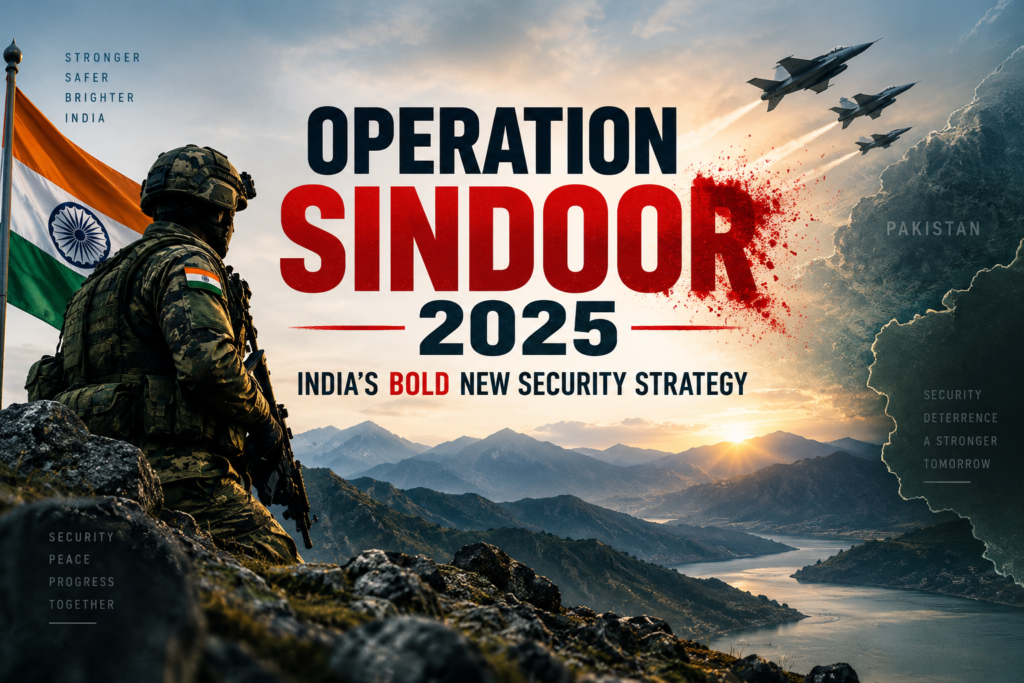
The Documentary and the Public Memory of War
The premiere of Declassified: Operation Sindoor in August 2026 has added a new layer to the public understanding of the operation. The two-part series examines the planning, execution and consequences of the 88-hour confrontation through leadership accounts and frontline perspectives. It premiered on Discovery Channel India and discovery+ on August 15, 2026.indiantelevision+1
Documentaries of this kind perform two roles. First, they preserve institutional memory by recording how decisions were made during a national crisis. Second, they shape public interpretation by deciding which events, individuals and technologies receive attention.
The most valuable contribution of a declassified account is not simply to celebrate military success. It should also explain the uncertainty involved in intelligence assessment, the risks of escalation, the role of diplomacy and the difficulties of distinguishing verified information from propaganda.
A mature national security conversation must include both achievement and accountability.
A New South Asian Strategic Playbook
Operation Sindoor did not eliminate the threat of terrorism, nor did it resolve the India-Pakistan dispute. It also did not make future crises predictable. Its significance lies instead in the precedent it created.
India demonstrated a willingness to respond to a major terrorist attack through a coordinated national strategy involving military force, diplomatic pressure, economic restrictions, water policy and information operations. The operation also showed that a nuclear environment does not automatically prevent limited conventional action.
The new normal is therefore not permanent war. It is a more conditional form of deterrence, in which terrorist attacks may carry direct and multidimensional consequences for the state believed to support them.
For Pakistan, the message was that proxy warfare could result in costs beyond the battlefield. For India, the operation created a higher standard for intelligence, precision, communication and escalation management. For the wider region, it introduced a more dangerous but also more transparent logic: restraint would no longer be assumed, and every future provocation would be assessed against the precedent of Operation Sindoor.
The strategic playbook has changed. The challenge now is to ensure that the new doctrine remains precise enough to deter terrorism without allowing the subcontinent to slide into an uncontrolled conflict.
Operation Sindoor was more than just a military campaign. It was an assertion of sovereignty and national resolve. It established a “New Normal” where terrorists and their state sponsors are treated as one and the same. As we look at the declassified accounts of those 88 hours, one thing is certain: the rules of engagement in South Asia have been rewritten, and this time, India holds the pen